14th February
by Drs Erin Maxted and Pattanam Zubair Vali
Day 6 of IWAH 2026: Learning, Fieldwork, and a Valentine’s Day to Remember
Day 6 of IWAH 2026 unfolded beautifully—coinciding with Valentine’s Day and beginning on a serene note. Cool morning breezes swept through the campus as peafowls filled the air with their calls, some even dancing as if welcoming us to another intense yet rewarding day of learning.
The morning sessions were led by Dr. Rajan Amin. He began with an overview of spatial mark recapture methods and incorporating Bayesian models, which is difficult material to cover in under an hour, but he managed to make it digestible for us veterinarians. He then moved onto an overview of sample designs, requirements, and practical applications. These basic ecological concepts, while they may seem unnecessary to many vets, are essential to working in wildlife conservation, and are surprisingly applicable in the field.
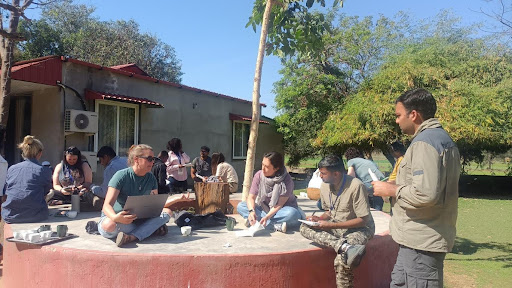
The focus then shifted to epidemiology, where Dr. Stuart Patterson guided us through the principles of disease outbreak investigation. The learning quickly became interactive as we split into smaller teams to brainstorm the requirements for investigating a disease outbreak in wildlife. Each team presented their ideas, creating an open forum for discussion. With participants from many nationalities, hearing diverse perspectives enriched the learning experience and reinforced the value of collaborative thinking.
Theory soon met practice as we moved into the field to investigate a mock disease outbreak. Under the hot sun, navigating thorny vegetation that tugged at our clothes, and encountering numerous “animals,” we were challenged both physically and mentally. Despite the conditions, the exercise was invaluable, teaching us critical techniques for initial outbreak response. A reflective group discussion followed, focusing on lessons learned and areas for improvement—again emphasizing the strength of shared learning.
Later in the day, Dr. Karikalan Matesh delivered a session on disease investigation in free-ranging wildlife, expanding on key considerations and practical challenges. This lecture perfectly set the stage for what awaited us next—field necropsies scheduled for the following day.
As the sun set, the academic intensity gave way to celebration. The day concluded with a Valentine’s night candlelight dinner, accompanied by soft music, laughter, and dance. Sharing the evening with the team made it a fitting and memorable end to a day that balanced rigorous learning with camaraderie and joy.
Day 6 was a reminder that conservation science is not just about data and diagnostics—it’s also about collaboration, adaptability, and the human connections that make challenging work truly meaningful.