12th February
by Drs Lina Gonzalez Gordon & Abdulrahaman Idris Adam
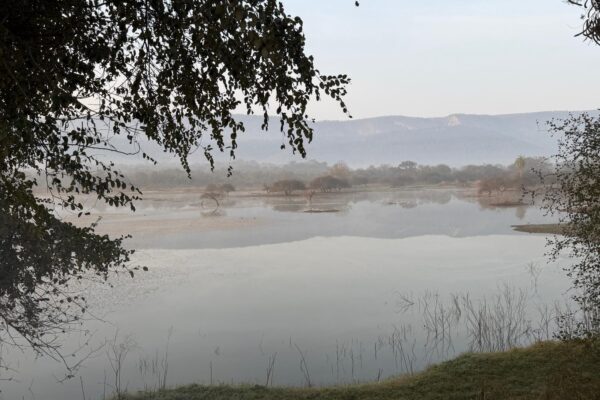
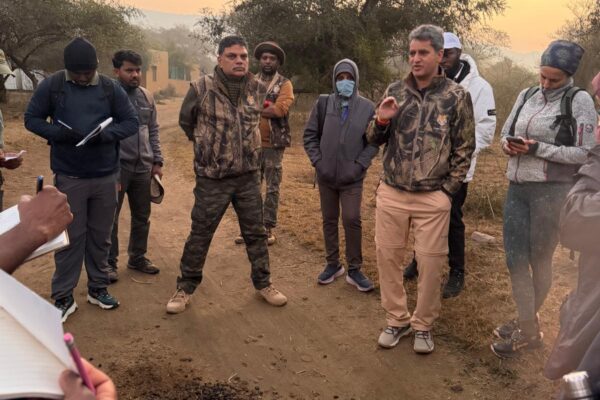
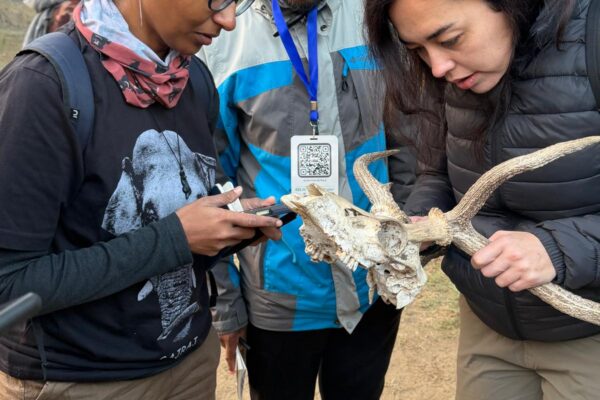
Our day began heading out before sunrise to the Reserve, where we set out on foot for our first field practical session: Identification and Interpretation of Tracks and Signs. Sariska quietly tells its stories through traces, some obvious, others easily missed, and learning to recognize them was the task of the day.
There was a special sense of excitement in the air as this activity marked the first hands-on practical component of the course, and expectations were certainly met. From shed antlers and scat to rub marks on trees, pugmarks on dusty trails, and seed shells left behind after being consumed by different species, animal presence was constantly revealed through indirect signs. While wildlife sometimes remains hidden from view, the evidence they left behind allowed us to understand who moves through this landscape of mountains, grasslands, dry deciduous forests, and cliffs spanning over 800 square kilometres: their distribution, when they were last present, and which species overlapped in space and time. Leopards, sambar deer, porcupines, and hyenas all left their marks. We also looked at antlers, discussing their structure and how age can be estimated from their characteristics.
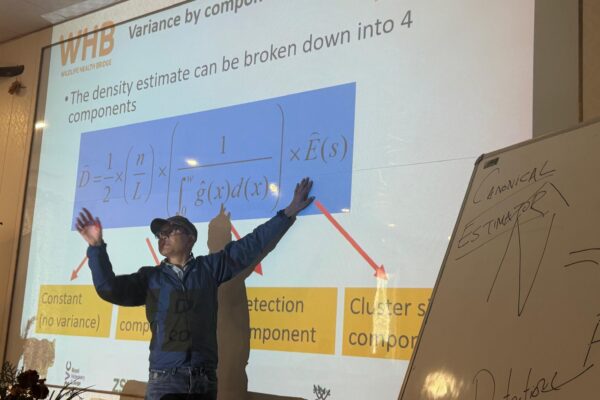
These field observations naturally led into discussions on population estimation during an interesting lecture. Alongside indirect approaches, direct methods such as camera trapping, distance sampling along transects, and capture-based techniques are used to estimate animal population size, animal density, species richness, and activity patterns across the landscape. This is a challenging task due to variation in detection probability, yet it is possible to gain meaningful insights from different species. when the right methods are applied.
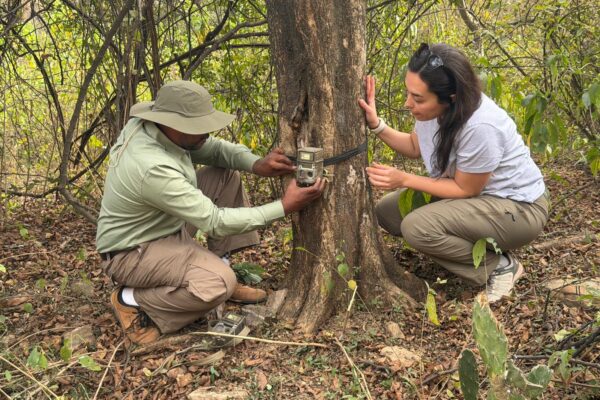
The afternoon was spent learning how to set up and position camera traps, an exercise that sparked curiosity about what might pass through our chosen locations in the coming days. Deciding where to place a camera trap requires prior information about the target species, including animal movement patterns and tracks used, as well as a careful understanding of key landscape features and habitat use. Discussions extended beyond simple population estimation, diving into broader applications of camera traps: from studying behaviour and activity patterns to assessing community structure, body condition, and occupancy. It was fascinating to see how technology complements ecological theory in practical conservation work. This visit ended with an unforgettable sight when some of us were lucky enough to see a leopard moments after it had caught a monkey, a powerful reminder of the beauty of Sariska.
We concluded the day with a lecture on occupancy modelling, gaining an overview of different models and their application in disease ecology and epidemiology.
Throughout the day, a key question guided our conversations: how does all of this connect to wildlife veterinary practice? Population estimation is essential not only for conservation planning, but also for understanding animal behaviour, disease dynamics, risk mapping, and for informing wildlife health management and disease control at the wildlife–livestock–human interface.
Of course, the day was balanced with welcome breaks: a well-deserved breakfast after the morning walk, tea breaks between lectures, and shared lunch and dinner that gave us time to reflect, exchange ideas, and connect with fellow participants. Delicious food and snacks and plenty of masala chai!