23rd February
by Drs Camila Nieto & Kiran Kumar
Today was one of the most exciting days of the course; we got to immobilize two animals.
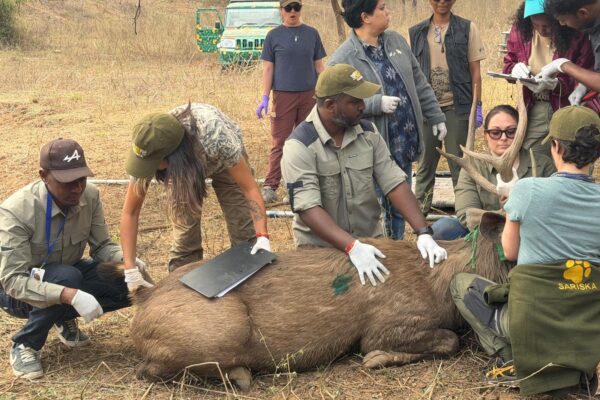
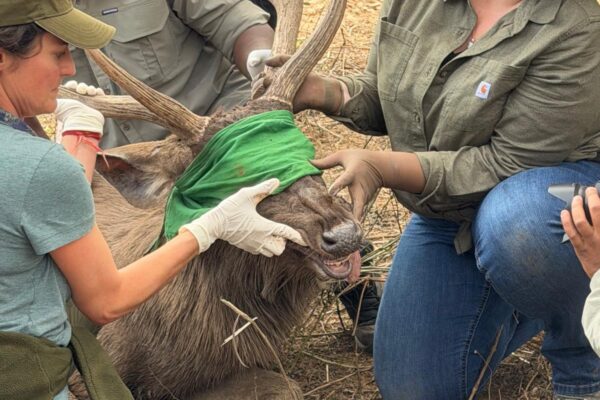
The day before, we were divided into two groups, and this morning the roles were assigned for the first immobilization. Everything was very structured. Two people were responsible for darting the animal, with one acting as backup in case the first dart missed. Another person was assigned to place the blindfold and control the head once the animal was down. Others were in charge of weighing, anesthesia monitoring, and sample collection. The sampling team collected feces, ectoparasites, swabs, and blood. It was a great example of how organized wildlife work needs to be, everyone had a clear responsibility.
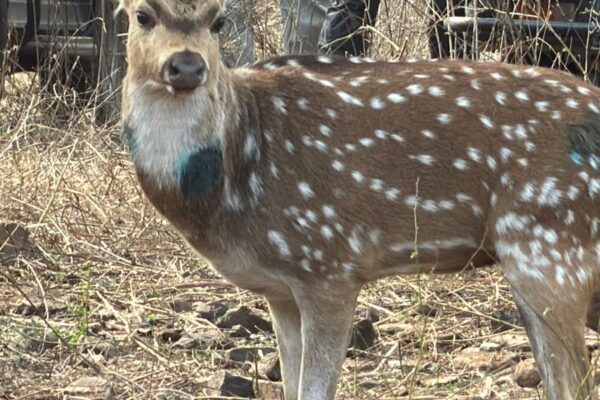
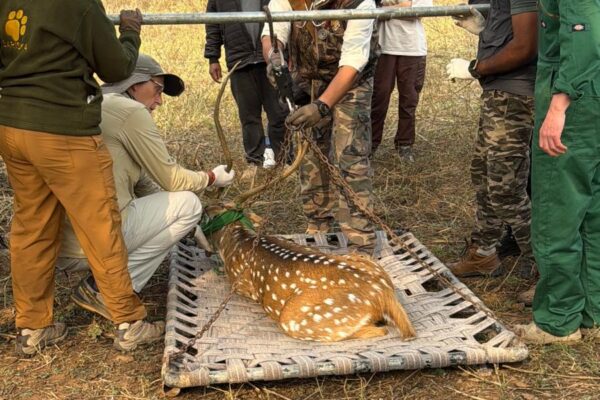
We drove into the park, and one of our team members darted the animal successfully on the first try. The rest of the vehicles waited at a safe distance until it transclocationsnso approach. Our group immobilized a male chital using a ketamine–medetomidine combination. The induction time was about seven minutes, which is well within the expected range for this protocol.
Once the animal went down, we approached calmly with the stretcher. Some of us transferred him onto it to obtain the weight, and then we repositioned him back onto the ground, ensuring he remained in sternal recumbency to reduce the risk of bloat. Overall, he remained stable. At one point, his oxygen saturation dropped below 90%, so oxygen was administered briefly, and he responded well.
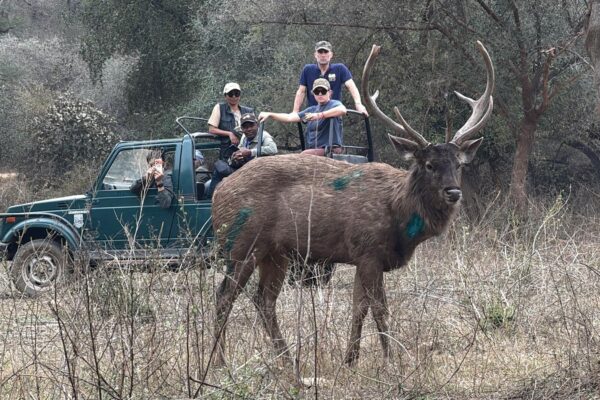
We were in charge of morphometrics. It was slightly challenging because of the number of people working around the animal, but we managed to obtain most of the measurements. At the end of the procedure, themedetomidine was reversed, and the animal recovered uneventfully. The day ended with an awe looking at the slides of Mass transclocationsnsoles were reassigned for the second group. They immobilized a male sambar. This induction took longer, close to 12 minutes. Because many people would again be working around the animal, it was decided to administer a top-up dose of ketamine to prevent him from becoming too light under anesthesia. The same procedure was repeated while our group observed.
Recovery for the sambar took noticeably longer, likely due to the additional ketamine administered. However, once reversed, he eventually stood and walked away steadily.
We ended the morning with a group debrief. Both tutors and students were happy with how the procedures went.
Later, we headed back to the resort, filled our stomachs, and freshened our strained bodies and minds for our evening sessions. Dr. Isaac Lekolool and Dr. Francis Gakuya, with a lot of experience and knowledge in wildlife, introduced us to wildlife veterinary practices in Kenya. The day ended in awe as we looked at slides of mass translocations of mega herbivores in Africa, and after dinner, some of us stayed back to watch the documentary on the tiger reintroduction at Sariska Tiger Reserve, which was really interesting and fulfilling.